Campus Landmarks
Explore the places that make our campus one of a kind.
Statues, a sundial that tracks the sun and a stone circle that doubles as an outdoor classroom are just a few of the many places with a story on TCU’s Fort Worth campus. Each landmark commemorates a person, place or moment in the University’s history. Use this guide to discover them before your visit or uncover the meaning behind a landmark you pass every day.
Start Here: Landmarks Worth Seeing
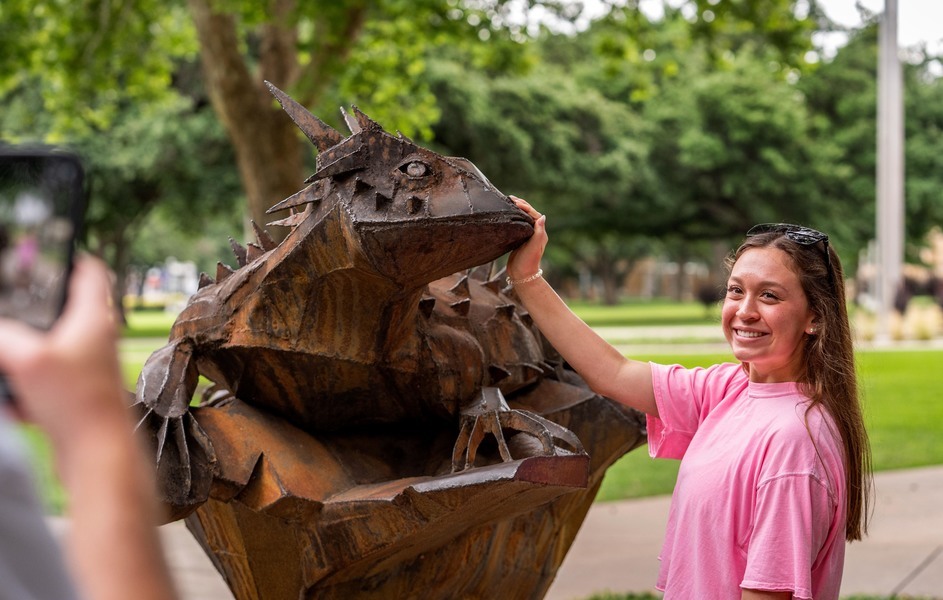
Horned Frog Statue
A tradition for good luck.Generations of TCU students have rubbed the nose of this welded-metal Horned Frog for an extra boost. Created by artist Seppo Aarnos and commissioned by the Student Government Association, the 1984 sculpture stands in the plaza between Reed and Sadler Halls and has become a beloved part of TCU campus tradition.
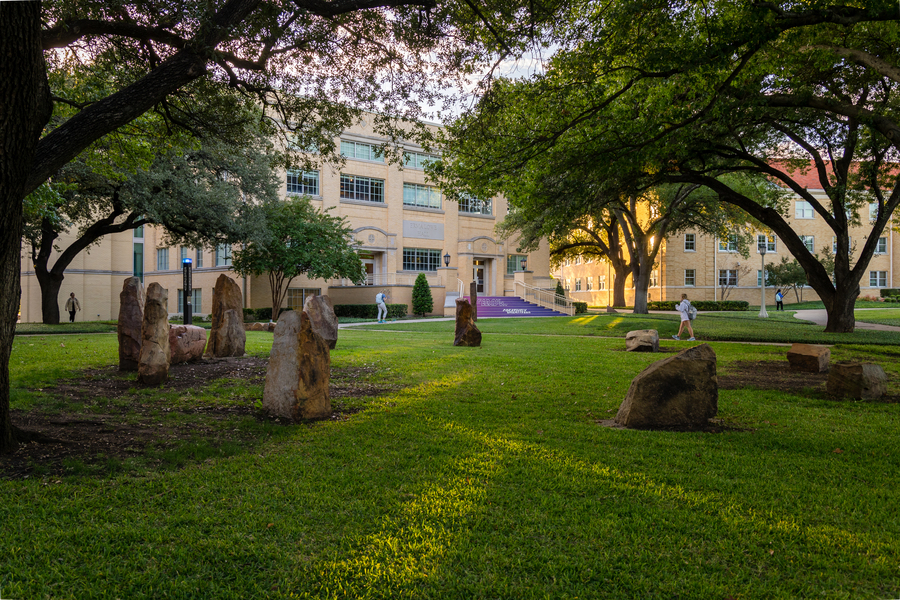
Froghenge
A stone circle with two rules: tell the truth and keep your temper. Faculty nicknamed it "Froghenge," but its formal name is "The Megalith at TCU." It is an idealized replica of a monument built in Scotland about 5,000 years ago, and today it works as an outdoor classroom. Inside the circle, no one may knowingly tell an untruth (unless it is part of art), and anyone who loses their temper in debate must leave.
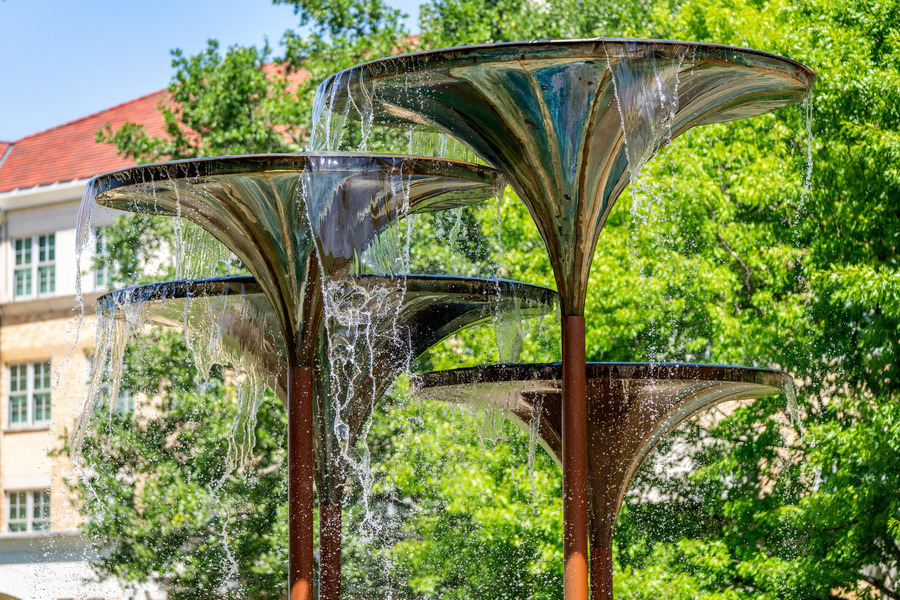
Frog Fountain
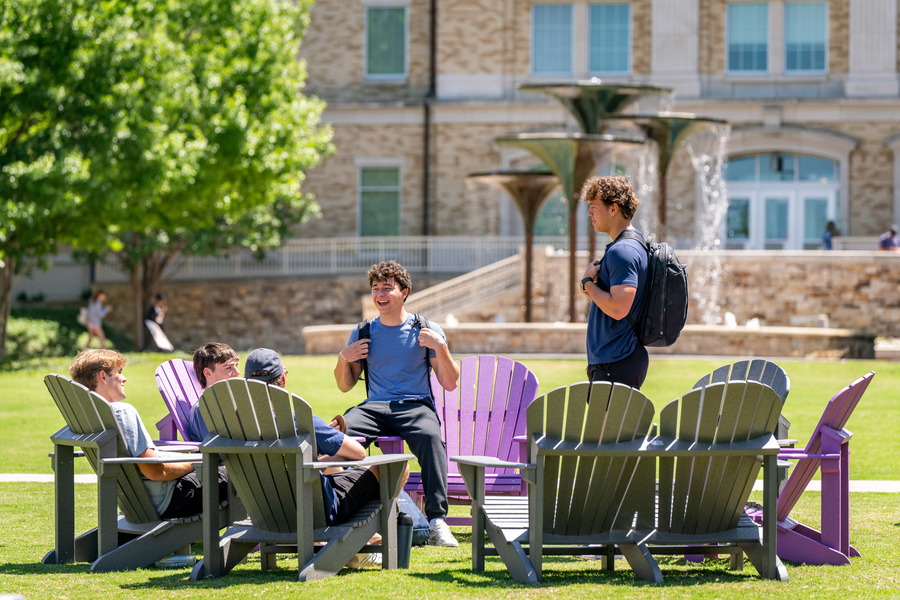
Lotus leaves, a symbol of education, and four decades as a campus gathering place. Four stylized lotus leaves, a historic symbol of education, form the centerpiece. Frog Fountain was a focal point of campus life for four decades in front of the Brown-Lupton Student Center, then was refurbished and moved to the new Campus Commons in 2008.
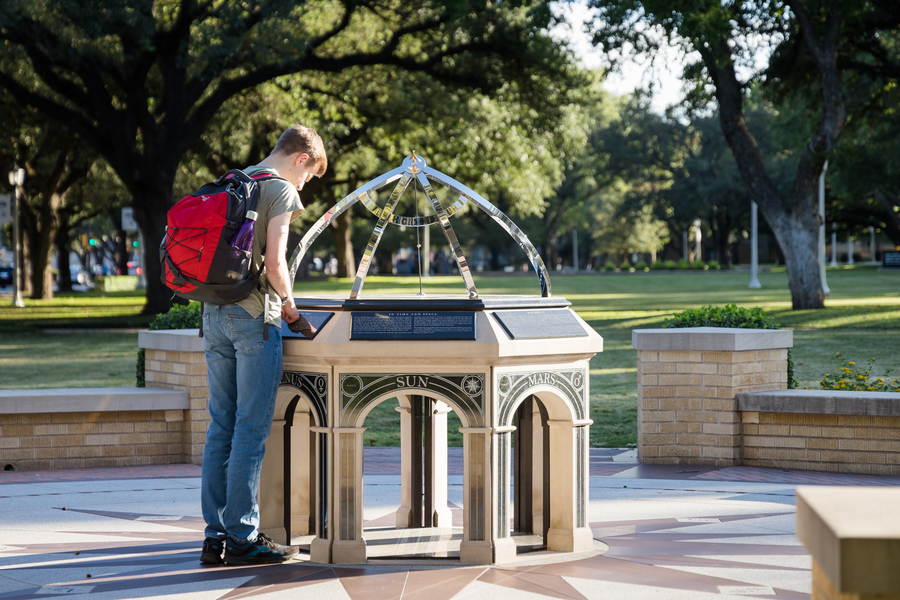
TCU Sundial
A clock that runs on sunlight, built for this exact spot. The TCU Sundial has no moving parts. It relies on the Earth's movement around the Sun to tell time to the nearest minute. Clockmaker and designer William Andrewes built it with a world map centered on the University's coordinates and a time scale made for TCU.
More Places to Explore
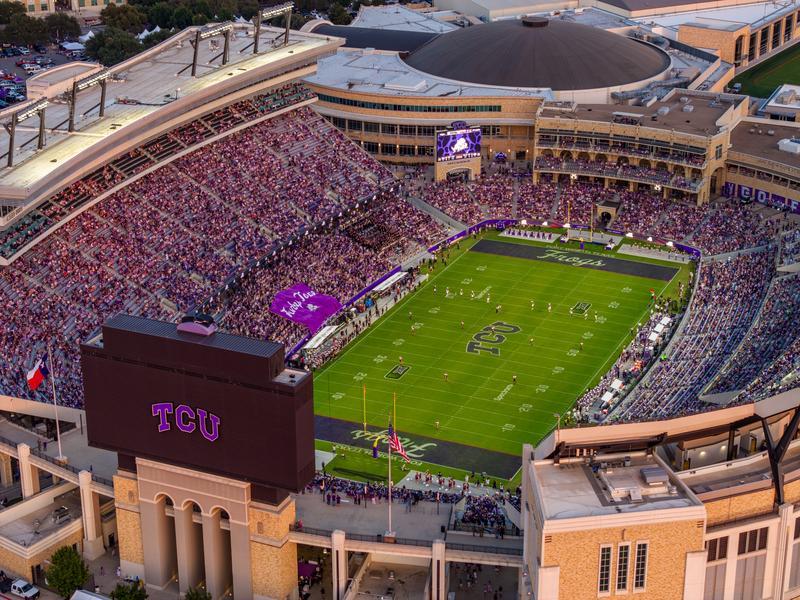
Amon G. Carter Stadium
Where game day comes alive. On game day, the Carter is the center of Horned Frog country. Home to TCU Football since 1930, the 45,000-seat stadium has seen generations of fans fill the stands and legends like Sammy Baugh, Davey O’Brien, Bob Lilly, and LaDainian Tomlinson take the field. Renovated in 2012, the stadium is named for legendary Fort Worth publisher Amon G. Carter.
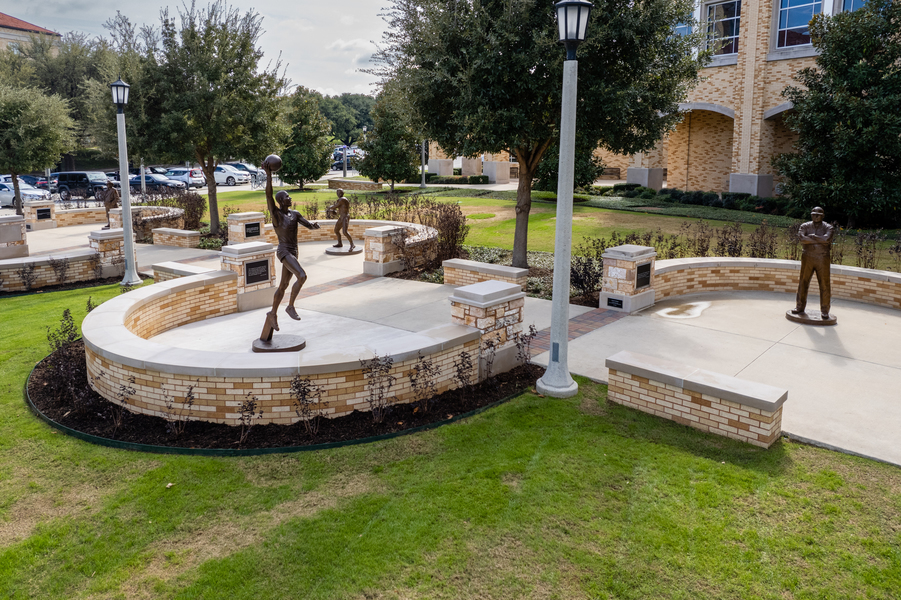
Parrish Statues
Four Horned Frog legends, side by side. Located in front of Schollmaier Arena, the statues honor four figures in TCU athletics: two-time national championship coach Leo R. “Dutch” Meyer; Heisman Trophy winner Davey O’Brien; James Cash ’69, the first Black student-athlete at TCU and in the Southwest Conference; and Gary Patterson, TCU’s all-time winningest football coach.
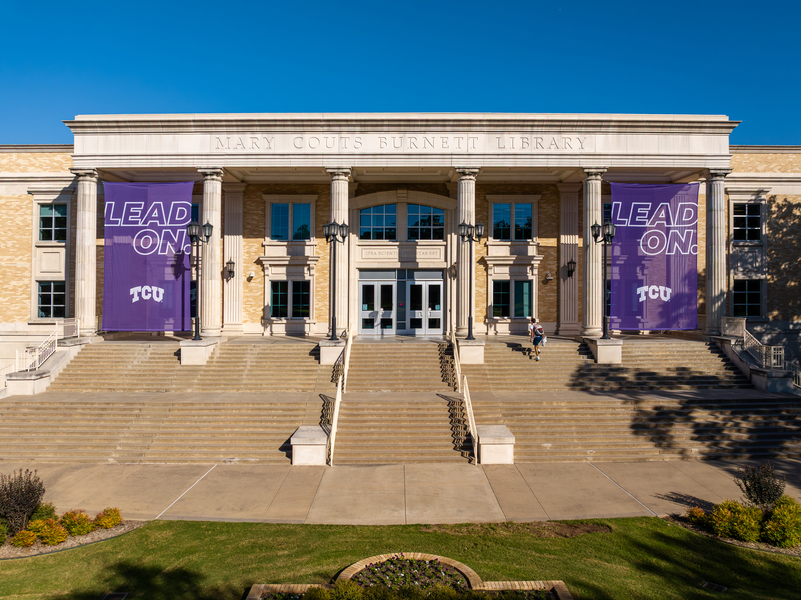
Mary Couts Burnett Library
A century of knowledge, discovery and TCU tradition.Opened in 1925, the Mary Couts Burnett Library became TCU’s first library building, with its namesake playing an important role in bringing the new campus landmark to life. Today, the historic space remains a campus hub, blending quiet reading rooms and archives with innovative technology, collaborative study areas and spaces for creativity.
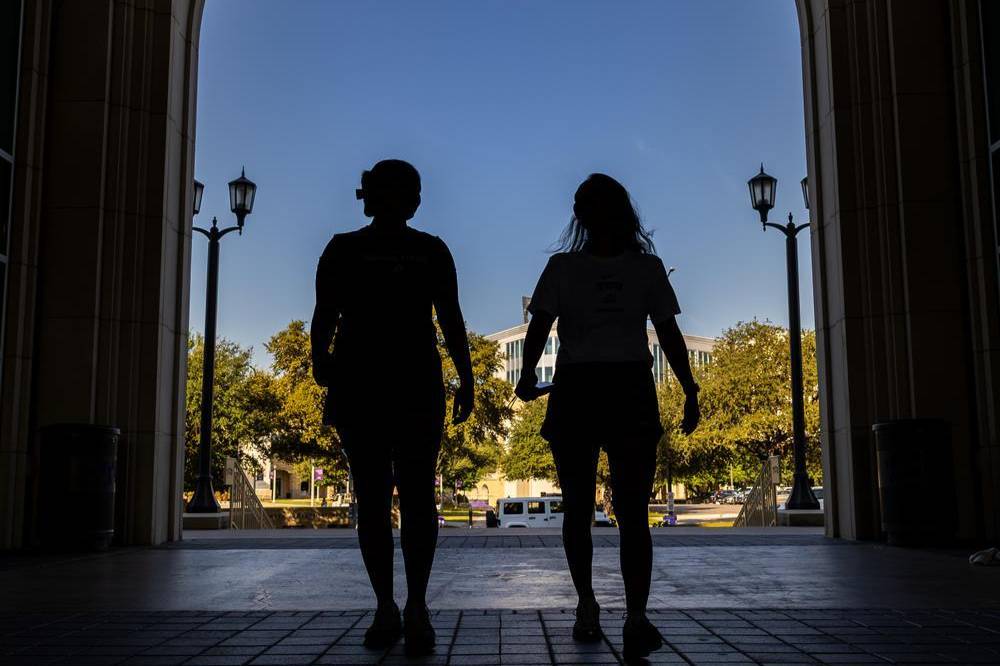
Brown-Lupton University Union
The gateway to campus life. The Brown-Lupton University Union, fondly known as the BLUU, brings the TCU community together through dining, retail, student services, events and everyday connection. Opened in 2008, the union anchors the Campus Commons and serves as one of the university’s most active gathering places.
Campus Commons
A gathering place at the heart of the Horned Frog experience. Surrounded by residence halls, the BLUU and green space, the Campus Commons is designed for connection—from grabbing a meal and meeting friends to relaxing between classes. Long before it became a center of student life, this land was home to a dairy that supplied milk to TCU’s boarding facility.
Robert Carr Chapel
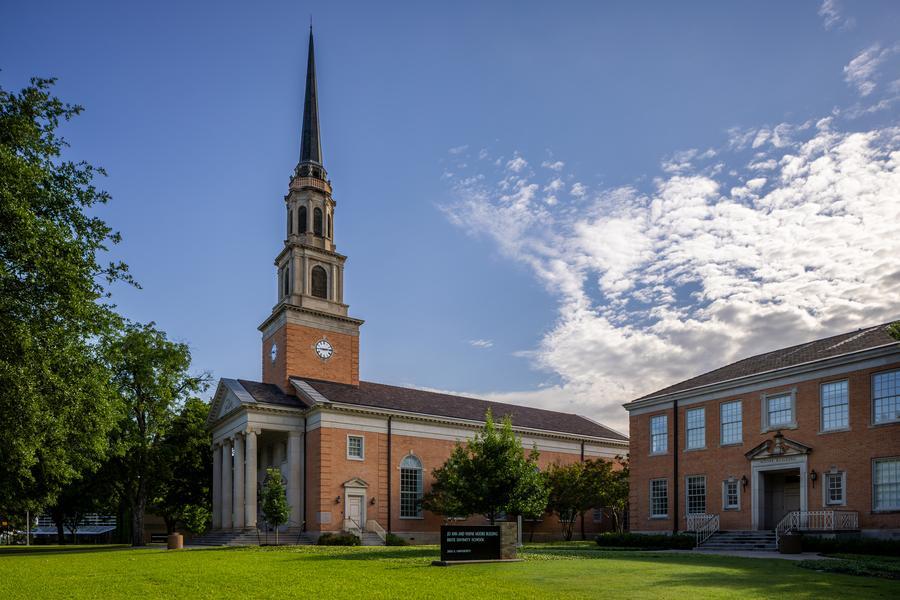
A place for reflection, celebration and faith. Dedicated in 1954, Robert Carr Chapel has welcomed generations of Horned Frogs and members of the Fort Worth community. Its American Colonial-inspired design features stone columns, brass chandeliers, Palladian windows and a distinctive spire, while the carillon rings the TCU alma mater across campus each hour.
Visit TCU
The best way to see these landmarks is to walk them. Plan your campus visit and see where Horned Frogs learn, gather and celebrate.